Get Familiar with Talented Generation

Showing posts with label leadership. Show all posts

Friday, July 09, 2010

A quick note on leadership

“If your actions inspire others to dream more, learn more, do more and become more, you are a leader.”

-John Quincy Adams
A few days ago someone asked me to describe my leadership style. My answer:

"I think I'm a responsive leader. The style I use to lead others depends on the situation. I dont take the lead on group assignments at work the same way I take the lead on planning surprise parties with friends. For this reason I cant be thrown into one leadership category and be comfortable. I think leaders have to be flexible in that no two situations are exactly the same. Some situations require you to be autocratic while others prompt for a more laissez-faire approach. Still, others beg for a  more democratic approach. I think effective leaders know how to adjust their leadership styles according to their audience and the task at hand."

One very important component of being a young professional is effective leadership. In the 1930s, Kurt Lewin developed a leadership framework based on a leader's decision-making behavior. Lewin argued that there are three types of leaders:

Autocratic leaders make decisions without consulting their teams. This is considered appropriate when decisions genuinely need to be taken quickly, when there's no need for input, and when team agreement isn't necessary for a successful outcome.
Democratic leaders allow the team to provide input before making a decision, although the degree of input can vary from leader to leader. This type of style is important when team agreement matters, but it can be quite difficult to manage when there are lots of different perspectives and ideas.
Laissez-faire leaders don't interfere; they allow the team to make many of the decisions. Typically this happens when the team is highly capable and motivated, and it doesn't need close monitoring or supervision.

Another model, the Blake-Mouton Managerial Grid helps you decide how best to lead, depending on your concern for people versus your concern for production. The model describes five different leadership styles: impoverished, country club, team leader, produce or perish, or middle of the road.

Yet another model, Action-Centered Leadership model is another framework that's consistent with behavioral theories of leadership. Using this model, the "best" leadership style is determined by balancing task, team, and individual responsibilities. Leaders who spend time managing each of these elements will likely be more successful than those who focus mostly on only one element.


While I'm not inclined to completely debunk leadership types, I believe everyone has their own style of stepping up and into leadership roles that cannot always fit neatly into one category. This is mainly because leaders bring their background, belief systems and previous experiences to every situation. I'm going to assume we can all agree no two people approach issues the same exact way. Two people can see the same exact accident on the same street corner and still describe the accident differently from one another. With that said, we must also understand that our efforts to "fit" people into one of three or one of one thousand categories can limit their potential. There is power in a label, be careful which ones you adapt for yourself and which ones you place on others.

The sad part is we hear more about when leaders fail than when they succeed. Consider this my honest effort to balance out my earlier post.

Think about how you interact with others. What kind of leader do you think you are? Do you adapt to situations or stand your ground based on your leadership style? Do you think you fit into one of the above categories?
“A good leader inspires people to have confidence in the leader, a great leader inspires people to have confidence in themselves” -Unknown
Source: http://www.mindtools.com/pages/article/newLDR_84.htm

Wednesday, February 10, 2010

Bare necessities: 5 Essentials for every Young Professional

1. A Resumé: You should ALWAYS have a copy of your most updated resume within reach. Be sure your resume is an accurate and honest representation of your abilities and your qualifications. It should be as close to perfect as possible (free of typos, consistent formatting, etc.). Print it out and comb over it line by line before you distribute it to others. Be sure your contact information is always up to date.

2.
Business Cards. I think this one is a given especially since business cards are so cheap and easy to come by. Dont believe me? Imagine this, you meet someone at a networking event and they do not have their cell phone. How are you going to give them your contact information? Write it on a napkin? Heck no! Politely offer them your business card and take down their information. Follow up within 24 hours with an email or a phone call (NOTE: texting and calling are not the same and should never be used interchangeably) and continue to build from there. After a few months of communicating you can look back and say it all started with a business card.

3.
Mentor: Find someone who has been where you are or someone who is where you want to be. Do not be afraid to reach out to them and make a genuine connection. They have valuable information and you should make use of them as a resource. Having a great mentor will make an incredible difference. They can light your path and become lifelong friends. Hey XW *wink*

4.
A tailored suit: Don’t just buy a suit in your respective size. Take it to a tailor and have it cut to fit you. Your waist may be a size 2 or 32 but you may need your pants hemmed. You WILL be able to tell the difference. Although you will have to invest a little more time and money in tailoring your suit, consider it an investment in your future. Click here for tips about "looking the part" of a YP from HUSL Today.

5. The perfect
handshake. Handshakes that are too firm make you seem like you're trying too hard and a soft handshake is just annoying (especially for men). Practice yours with friends you trust until you reach the oh so important middle ground. Well my friends, I know this list is by no means exhaustive. What do you consider essential to your success in your profession? Did I miss anything? Do you agree.

The floor is yours. What things do you think have been essential to your success? What do you consider a bare necessity? Share it amongst friends

Monday, February 08, 2010

African American firsts

Its safe to say that today's African American firsts focus on inventors

Elijah McCoy (1843 - 1929) invented an automatic lubricator for oiling steam engines in 1872. The term "the real McCoy" is believed to be a reference about the reliability of Elijah McCoy's invention.


Garrett Augustus Morgan (1877 - 1963) invented, among many other things, a 3-way automatic stop sign, which he sold to General Electric. It was used in the U.S. until the 3-light traffic sign was developed.


Otis Boykin (1920 -1982) invented electronic control devices for guided missiles, IBM computers, and the control unit for a pacemaker.


George Carruthers (1939 - ) invented the far ultraviolet electrographic camera, used in the 1972 Apollo 16 mission. This invention revealed new features of Earth's far-outer atmosphere and deep-space objects from the perspective of the lunar surface. Carruthers was inducted into the National Inventor's Hall of Fame in 2003.


James West's (1931 - ) research in sound technology led to the development of foil-electret transducers used in 90% of all microphones built today and in most new telephones being manufactured. West holds 47 U.S. and more than 200 foreign patents on microphones and techniques for making polymer foil-electrets. He was inducted into the National Inventor's Hall of Fame in 1999.


Please join HUSL Today is honoring these African American inventors who have impacted all of our lives. Are there any inventions that you are particularly fond of? Consider the comment section your platform to share them with your friends.

Have a great Monday my friends!

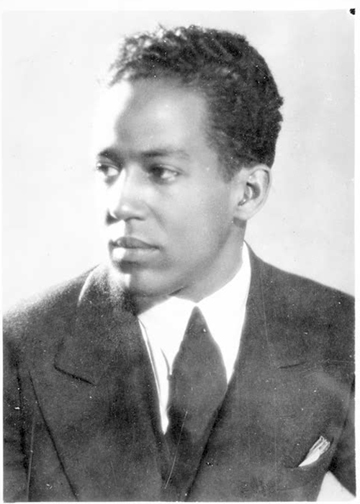
Talented Genration Salutes

Langston Hughes


James Mercer Langston Hughes, (February 1, 1902 – May 22, 1967) was an American poet, novelist, playwright, short story writer, and columnist. He was one of the earliest innovators of the new literary art form jazz poetry. Hughes is best-known for his work during the Harlem Renaissance. He is also best known for what he wrote about the Harlem Renaissance, "Harlem was in vogue."
Hughes' life and work were enormously influential during the Harlem Renaissance of the 1920s alongside those of his contemporaries, Zora Neale Hurston, Wallace Thurman, Claude McKay, Countee Cullen, Richard Bruce Nugent, and Aaron Douglas, who, collectively (with the exception of McKay), created the short-lived magazine Fire!! Devoted to Younger Negro Artists.

In his work he confronted racial stereotypes, protested social conditions, and expanded African America’s image of itself; a “people’s poet” who sought to reeducate both audience and artist by lifting the theory of the black aesthetic into reality. Moreover, Hughes stressed the importance of a racial consciousness and cultural nationalism devoid of self-hate that united people of African descent and Africa across the globe and encouraged pride in their own diverse black folk culture and black aesthetic.

Langston Hughes was one of the few black writers of any consequence to champion racial consciousness as a source of inspiration for black artists. His African-American race consciousness and cultural nationalism would influence many foreign black writers, such as Jacques Roumain, Nicolás Guillén, Léopold Sédar Senghor, and Aimé Césaire. With Senghor and Césaire and other French-speaking writers of Africa and of African descent from the Caribbean like René Maran from Martinique and Léon Damas from French Guiana in South America, the works of Hughes helped to inspire the concept that became the Négritude movement in France where a radical black self-examination was emphasized in the face of European colonialism.

Langston Hughes was not only a role model for his calls for black racial pride instead of assimilation, but the most important technical influence in his emphasis on folk and jazz rhythms as the basis of his poetry of racial pride. In 1930, his first novel Not Without Laughter won the Harmon Gold Medal for literature. Hughes's first collection of short stories came in 1934 with The Ways of White Folks. He received a Guggenheim Fellowship in 1935.

Langston Hughes died of complications from prostate cancer in May 22, 1967, in New York. In his memory, his residence at 20 East 127th Street in Harlem, New York City, has been given landmark status by the New York City Preservation Commission, and East 127th Street has been renamed "Langston Hughes Place."

Here is another one of my favorite poems from Hughes:
What happens to a dream deferred?
Does it dry up
like a raisin in the sun?
Or fester like a sore--
And then run?
Does it stink like rotten meat?
Or crust and sugar over--
like a syrupy sweet?
Maybe it just sags
like a heavy load.
Or does it explode?

Check out a montage Nike created for the 2008 Beijing Olympics:


A Selected Bibliography
Poetry
Ask Your Mama: 12 Moods for Jazz (1961)
Collected Poems of Langston Hughes (1994)
Dear Lovely Death (1931)
Fields of Wonder (1947)
Fine Clothes to the Jew (1927)
Freedom's Plow (1943)
Montage of a Dream Deferred (1951)
One-Way Ticket (1949)
Scottsboro Limited (1932)
Selected Poems (1959)
Shakespeare in Harlem (1942)
The Dream Keeper and Other Poems (1932)
The Panther and the Lash: Poems of Our Times (1967)
The Weary Blues (1926)
Prose
Good Morning, Revolution: Uncollected Social Protest Writings by Langston Hughes (1973)
I Wonder as I Wander (1956)
Laughing to Keep From Crying (1952)
Not Without Laughter (1930)
Remember Me to Harlem: The Letters of Langston Hughes and Carl Van Vechten, 1925-1964 (2001)
Simple Speaks His Mind (1950)
Simple Stakes a Claim (1957)
Simple Takes a Wife (1953)
Simple's Uncle Sam (1965)
Something in Common and Other Stories (1963)
Tambourines to Glory (1958)
The Arna Bontemps-Langston Hughes Letters (1980)
The Big Sea (1940)
The Langston Hughes Reader (1958)
The Ways of White Folks (1934)
Drama
Black Nativity (1961)
Collected Works of Langston Hughes, vol. 5: The Plays to 1942: Mulatto to The Sun Do Move (2000)
Don't You Want to Be Free? (1938)
Five Plays by Langston Hughes (1963)
Little Ham (1935)
Mulatto (1935)
Mule Bone (1930)
Simply Heavenly (1957)
Soul Gone Home (1937)
The Political Plays of Langston Hughes (2000)
Poetry in Translation
Cuba Libre (1948)
Gypsy Ballads (1951)
Selected Poems of Gabriela Mistral (1957)
Translation
Masters of the Dew (1947)

For his contributions to African American culture and his inspirational literary works, Talented Generation salutes Langston Hughes!

On THIS date in black history

February 8, 2010

1865 - The first African American major in the United States Army is a physician, Dr. Martin Robinson Delany.


1871-Justina Ford ,an African-American physician and humanitarian was born. As a doctor breaking down barriers for Blacks and women, Ford also worked as a humanitarian: her expertise in gynecology, obstetrics, and pediatrics was often provided to low-income and indigent people of all races. She delivered over 7000 babies during her distinguished practice of more than 50 years.


1894 - Congress repeals the Enforcement Act, which makes it easier for some states to disenfranchise African American voters.


1898- The “Grandfather Clause” was enacted for voting purposes. It was a legal and constitutional mechanism passed by seven Southern states during reconstruction to deny suffrage to black Americans. It meant that those who had enjoyed the right to vote prior to 1867, or their lineal descendants, would be exempt from educational, property, or tax requirements for voting. As a result, even if they met all the requirements, they were not allowed to vote.


Because the former slaves were not granted that right until the adoption of the Fifteenth Amendment in 1870, these clauses worked effectively to exclude Blacks from voting and assured the vote of many impoverished and illiterate whites. In 1915 the Supreme Court declared the grandfather clause unconstitutional because it violated equal voting rights guaranteed by the Fifteenth Amendment.


1924-Joe Black, an African-American baseball player in the Negro Leagues and author is born. He became the first Black pitcher to win a World Series game


1925 - Marcus Garvey is sent to federal prison in Atlanta, Georgia for mail fraud in connection with the sale of stock in his Black Star Line. His prosecution was vigorously advocated by several prominent African American leaders, including Robert Sengstacke Abbott and others. Garvey was railroaded because of the power he had amassed over the African American population of America.


1925 - Students stage a strike at Fisk University to protest the policies of the white administration at the school.


1944 - Harry S. McAlpin of the "Daily World" in Atlanta, Georgia, is the first African American journalist accredited to attend White House press conferences.


1965 - Dr. Joseph B. Danquah, Ghanaian political leader, joins the ancestors. He had been the leader of the United Gold Coast Convention, a political body which had pressed the British for a gradual relinquishing of colonial rule.


1968 - Gary Coleman is born in Zion, Ohio. He will become a child actor portraying "Arnold" in the television series, "Different Strokes," which aired from 1978 to 1986. Go ahead and say it "What you talking bout Willis?"


1968 - Highway Patrol Officers kill three South Carolina State University students during a demonstration in Orangeburg, South Carolina. Students are protesting against a whites-only Orangeburg bowling alley.


1970 - Alonzo Mourning is born in Chesapeake, Virginia. He became a basketball star at Georgetown University and went on to play for the NBA Charlotte Hornets, New Jersey Nets and later the Miami Heat.

He was praised for his courage for making a comeback after undergoing a kidney transplant and years later winning his first NBA Championship with the Miami Heat in 2006.


1984 - Kareem Abdul-Jabbar of the Los Angeles Lakers scores 27 points

while leading his team to a 111-109 victory over the Boston Celtics. Abdul-Jabbar passed Wilt Chamberlain's NBA career record of 12,682 field goals.


1986 - Oprah Winfrey becomes the first African American woman to host

a nationally syndicated talk show.


1986 - 5' 7" Spud Webb, of the Atlanta Hawks, wins the NBA Slam Dunk

Competition.


1990 - CBS News suspends resident humorist Andy Rooney for racial

comments he supposedly made to a gay magazine; Rooney denies making the comments.


1995 - The U.N. Security Council approves sending 7,000 peacekeepers

to Angola to cement an accord ending 19 years of civil war.


1995- This date observes National African American Parent Involvement Day (NAAPID).


2000 - Edna Griffin, an Iowa civil-rights pioneer best known for integrating lunch counters, passes away at the age of 90. In 1948, Griffin led the fight against Katz Drug Store in downtown Des Moines, which refused to serve blacks at its lunch counter. Griffin staged sit-ins, picketed in front of the store and filed charges against the store's owner, Maurice Katz, who was fined. The Iowa Supreme Court then enforced the law which made it illegal to deny service based on race. She organized Iowans to attend the Rev. Martin Luther King Jr.'s 1963 march on Washington, D.C., and helped start the former radio station KUCB. On May 15, 1999, Des Moines' mayor proclaimed "Edna Griffin Day." On February 5, 2000, Griffin was inducted into the Iowa African American Hall of Fame.

Source: http://www.informationman.com/today.htm

Friday, February 05, 2010

On THIS date in black history

February 5

1866 - The distribution of public land and confiscated land to freedmen and loyal refugees in forty acre lots is offered in an amendment to the Freedmen's Bureau bill by Congressman Thaddeus Stevens. The measure is defeated in the House by a vote of 126 to 37. An African American delegation, led by Frederick Douglass calls on President Johnson and urges ballots for former slaves. The meeting ends in disagreement and controversy after Johnson reiterates his opposition to African American suffrage. I want my 40 acres.


1934 - Henry (Hank) Aaron is born in Mobile, Alabama. He holds the record for runs batted in with 2297, and his a Gold Glove Winner in 1958, 1959, and 1960. In April 8, 1974, he hit a 385-foot home run against the Los Angeles Dodgers, surpassing Babe Ruth's record of 714 career home runs. He ended his career with 755 home runs.


1941 - Barrett Strong is born in West Point, Mississippi. He became a Rhythm and Blues singer best known for his recording of "Money (That's What I Want)." He was also be a prolific songwriter, responsible for hits such as "Just My Imagination," "Papa Was A Rolling Stone," and "Ball of Confusion." He received a Grammy Award for Best Rhythm & Blues Song for co-writing "Papa Was a Rollin' Stone."


1956 - L.R. Lautier becomes the first African American to be admitted to the National Press Club.


1958 - Clifton W. Wharton, Sr. becomes the first African American to head an American diplomatic mission in Europe when he is confirmed as minister to Romania.


1962 - A suit seeking to bar Englewood, New Jersey, from maintaining "racial segregated" elementary schools, is filed in United States District Court.


1968 - Students in Orangeburg, South Carolina try to end the discriminatory practices of a local bowling alley. Their confrontation with police and the National Guard, and the subsequent death of three students, creates widespread outrage among students on campuses across the South.


1969 - Cinque Gallery is incorporated by African American artists Romare Bearden, Ernest Crichlow, and Norman Lewis. Located in the SoHo district of New York City, the nonprofit gallery's mission is to assist in the growth and development of minority artists and to end the cycle of exclusion of their work from the mainstream artistic community.


1972 - Robert Lewis Douglas, founder, owner and coach of the New York Renaissance is the first African American inducted into the Basketball Hall of Fame in Springfield, Massachusetts. The New York Renaissance was an African American team that won 88 consecutive games in 1933.


1977 - Sugar Ray Leonard defeats Luis Vega in 6 rounds in his first professional fight.


1989 - Kareem Abdul-Jabar becomes the first NBA player to score 38,000 points.


1994 - White supremacist Byron de la Beckwith is finally convicted of Medger Evers' murder, more than thirty years after Evers was shot in the back from ambush. After deliberating for seven hours, a jury of eight African Americans and four whites convicted 73-year-old De La Beckwith of Medgar Evers's murder, sentencing him to life in prison. He died there seven years later. As a Mississippi State Supreme Court justice wrote about the retrial: "Miscreants brought before the bar of justice in this state must, sooner or later, face the cold realization that justice, slow and plodding though she may be, is certain in the state of Mississippi."


Wednesday, February 03, 2010

On THIS date in Black History

1810 - The Argentine national hero from Buenos Aires, Argentina, Antonio Ruiz (El Negro Falucho), joins the ancestors, fighting for his country.

1855 - The Wisconsin Supreme Court declares that the United States Fugitive Slave Law is unconstitutional.

1870- Congress ratifies the 15th Amendment. The amendment granted black men the RIGHT TO VOTE.

1874 - Blanche Kelso Bruce is elected to the United States Senate from Mississippi. He will be the first African American senator to serve a full term and the first to preside over the Senate during a debate.

1879 - Charles Follis is born in Wooster, Ohio. He is the first African American professional football player in the United States reported by the press. He played for a professional team known as the Shelby Blues, in Shelby, Ohio. He played from 1904-1906 and retired due to injuries.

Editor's note: In 1972, the Pro Football Hall of Fame will discover proof that William (Pudge) Heffelfinger, a Yale All-American, played one game for $ 500, for the Allegheny Athletic Association in 1892, making him the actual 'first' to play football for pay. Follis will join the ancestors in 1910 after succumbing to pneumonia.

1935 - Johnny "Guitar" Watson is born in Houston. Texas. He will become a guitarist and singer known for his wild style of guitar playing and the sound which merged Blues Music with touches of Rhythm & Blues and Funk. He died of a heart attack on May 17, 1996.

1938 - Emile Griffith is born in St. Thomas, Virgin Islands. He won the Golden Gloves title and turned professional in 1958. In his career, he met 10 world champions and box 339 title-fight rounds, more than any other fighter in history. He was elected to the International Boxing Hall of Fame with the distinction of being the third fighter in history to hold both the welterweight and middleweight titles.

1938 - Elijah Pitts is born in Mayflower, Arkansas. He will become a professional football player with the Green Bay Packers. A major contributor as a running back, he will help his team win Super Bowl I. He will spend nine years with the Green Bay Packers during their championship years under Hall of Fame coach Vince Lombardi. The Packers will win four NFL championships and two Super Bowls during his career. He returned to the Super Bowl thirty years later as a running back coach with the Buffalo Bills. He died on July 10, 1998 after succumbing to abdominal cancer.

1939 - The Baltimore Museum of Art exhibit, "Contemporary Negro Art," opens. The exhibit, which ran for 16 days, featured works by Richmond Barthe, Aaron Douglas, Archibald Motley, Jr., and Jacob Lawrence's Toussaint L'Ouverture series.

1947 - Percival Prattis of "Our World" in New York City, becomes the first African American news correspondent admitted to the House and Senate press galleries in Washington, DC.

1948 - Laura Wheeler Waring, portrait painter and illustrator, died. Trained at the Pennsylvania Academy of the Fine Arts, she received the Harmon Award in 1927 for achievement in the fine arts and, with Betsey Graves Reyneau, completed a set of 24 renderings of their works entitled "Portraits of Outstanding Americans of Negro Origins" for the Harmon Foundation in the 1940's.

1948 - Rosa Ingram and her fourteen and sixteen-year-old sons are condemned to death for the alleged murder of a white Georgian. Mrs. Ingram asserted that she acted in self-defense.

1964 - School officials report that 464,000 Black and Puerto Rican students boycotted New York City public schools.

1965- Geraldine McCullough wins Widener Gold Medal for Sculpture

1980 - Muhammad Ali starts tour of Africa as President Jimmy Carter's envoy.

1981 - The Air Force Academy drops its ban on applicants with sickle-cell trait. The ban was considered by many a means of discriminating against African Americans.

1984 - A sellout crowd of 18,210 at Madison Square Garden in New York City sees Carl Lewis best his own world record in the long jump by 9-1/4 inches.

1989 - Former St. Louis Cardinals' first baseman, Bill White becomes the first African American to head an American professional sports league when he was named to succeed A. Bartlett Giamatti as National League president.

1993 - The federal trial of four police officers charged with civil rights violations in the videotaped beating of Rodney King, began in Los Angeles.

1993 - Marge Schott is suspended as Cincinnati Reds owner for one year for her repeated use of racial and ethnic slurs.


As always, I know this list is not exhaustive, feel free to share your knowledge about what happened on THIS day in black history.

Tuesday, February 02, 2010

Talented Generation Presents: Spotlight on YP Companies!

This is Talented Generation's first ever spotlight on YP Companies! Here, we will highlight companies and other organizations owned and/or ran primarily by Young Professionals. The companies highlighted here can also serve as inspiration for my Talented Generation friends who are plotting their career paths.


Creative Party Designing is a premier licensed event planning company that has been specializing in personal and professional event coordinating since 2007. Creative Party Designing is dedicated to coordinating events to satisfy unique & traditional customer specifications.

Creative Party Designing has coordinated events in Los Angeles, New York, Atlanta & Florida.
Creative Party Designing handles ALL of the following:
Destination weddings
International events
Corporate Events
Sporting Events
Celebrity Events
Charity Events
Make-up Bars
Fashion & Trunk Shows
Engagement Parties
Weddings
Receptions
Bridal Showers
Bachelor/Bachelorette Parties
Anniversary Parties
Retirement events
Promotion celebrations
Graduation parties
Birthday Parties
YOUR NEXT EVENT!

To ensure the success of each event, Creative Party Designing employs a diverse staff of event planners, personal assistants, publicists, photographers, videographers, graphic & webpage designers, hair stylists, make-up artists, entertainers, venue locators, florists, and musicians. It is a one stop shop for all your event planning needs. If you can dream it up, Creative Party Designing can make it happen!

Their motto is "You name it, we plan it!" There is no job too large or too small!
If you have an event coming up, do not make the mistake of planning it without Creative Party Designing. Give your guests the ultimate experience!

All customers are provided with a free initial consultation. Send all inquiries to Creative Party Designing at creativepartydesigning@gmail.com.


The owner of Creative Party Designing, Makeva Harold, is also giving back to her community through her non-profit foundation-The Makeva Harold Foundation. Her foundation seeks to broaden the horizons of youth and adults at risk or in crisis through individualized need assessments, providing education, employment, therapeutic, and housing services intended for the development of independent, productive and successful members of the community.

The Makeva Harold Foundation provides community members with computer training, workshops on professional resume writing, budgeting skills, parenting skills, interviewing skills, assist the unemployed in obtaining gainful employment and any other skills deemed necessary for community members to be self sufficient.

The Foundation has two divisions: adult services and youth services. Each division conducts monthly workshops on various topics which focus on creating self-sufficiency amongst individuals in the community. The Foundation hosts quarterly fundraisers, which allows them to offer their services to the community for free. If you would like to donate or volunteer your services to the Makeva Harold Foundation, here is their contact info:

Makeva Harold, MSW
Makeva Harold Foundation Inc.
100 S. Dixie Highway, Ste #304
West Palm Beach, FL 33401
Office: (561) 655-8508
Fax: (561) 370-3322

Wednesday, January 27, 2010

Talented Generation TIPS: Leadership in Tough Times Vol 1

We all have tough times. For some of us tough times means not having any money in the bank. For some of us tough times means means trying to make ends meet or struggling to put food on the table. For others tough times means you're so behind in school you don't know where to start in order to catch up (Amen!). We may have tough times in the work place or in our personal lives.


The bottom line is that we all have our own definition of tough times and unique ways to cope with them. How you handle tough times is often a true reflection of your character. In order to remain an effective leader in tough times you must have a keen sense of obstacles that lay ahead and the ability to overcome them. The following are a few ways to lead yourself and others through tough times:


Acknowledge the situation. The first thing you must do is acknowledge the situation. The worst thing you can do is run from it and play the blame game. Acknowledge the situation exists and be solution oriented. No one wants to hear excuses or your lame reasons for trying to get out of being accountable. When a problem arises ask yourself this: What are you going to do about it?
Know Yourself. Ask yourself whether you have the skills to do the job you have been entrusted to do? If you are completely honest with yourself you should be able to discern whether you have the capacity to tackle the tasks in front of you. If you have the talents necessary to succeed at the job, it will be far less stressful than if you bite off more than you can chew. If you know yourself and your abilities you are more likely to ask for help before you become overwhelmed.


Listen. Let me say that again LISTEN! When others are trying to talk to you do not become so preoccupied with your own issues that you cannot focus on the task at hand. Everyone has issues, you are not the only one. Do not think your issues are more complicated or more important than anyone else's. Listen to what others are saying around you because they may be telling you the solution to your problem(s). Keep your ears open. Even a fool says something wise every blue moon.


Do not be afraid to ask for help. Unless you work in a dog-eat-dog place where you cannot rely on your co-workers for help without them stabbing you in your back (believe me such places exist) you should not hesitate to ask for help. Sometimes we bring tough times on ourselves because we want to do everything on our own and relish in the glory of our success. This becomes a problem for young professionals because we are eager to prove ourselves. Young professionals are less likely to ask for help because of our desire to stand out from the crowd by taking on and tackling more difficult tasks. Ask for help from someone you trust and who has been in your shoes. When they give you their perspective-Listen!


Never lose sight of the goal in mind. This one should be self explanatory. Keep your eyes on the prize. If you were asked to write a 10 page brief yesterday do not spend your time griping about it, tackle the task and move on. The time you spend focusing on how tough times are is wasted time you will never get back. If the task seems impossible, acknowledge the situation and ask yourself whether you have taken on too much. Do not allow the task at hand to deter you away from your end goal. Take responsibility for what you have committed yourself to but do not lose sight of the light at the end of the tunnel.


What do you think? Did I miss anything? Do you have any TIPS you would like to share? Consider the comment section your platform.


Stay focused my friends!


Note: the above key points are excerpted from Kelvin Redd's monthly newsletter "Servant Leadership Today."

Sharing IS Caring